Why Retail Isn't Dying - It's Just Getting More Demanding
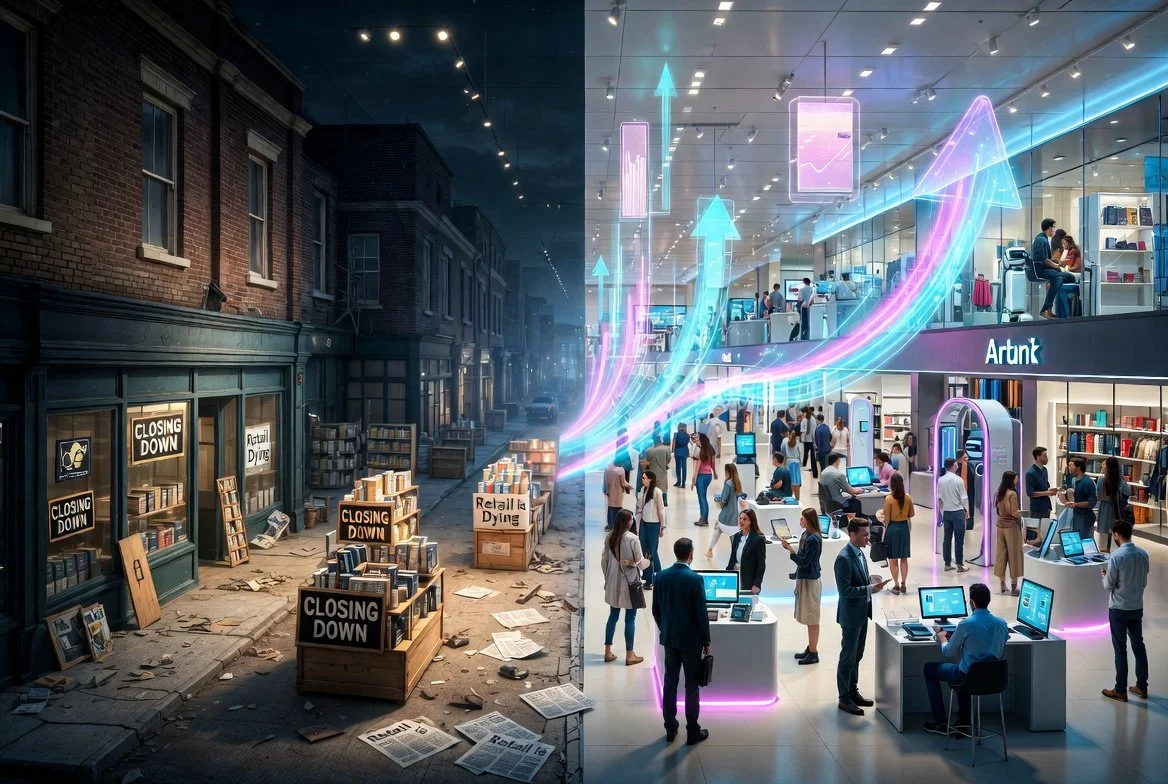
Let's start with a story.
A friend visited Dubai last year. When I asked if he did any shopping, he thought about it for a second. "Not really," he said. "I saw sharks, went ice skating, there was a Picasso exhibition. We ate somewhere nice." Then he paused. "Actually, yeah, I did buy a few things."
That pause tells you everything about where retail is heading.
Dubai Mall welcomed 111 million visitors last year. More than any airport on earth. People weren't going there primarily to shop. They were going to experience something. The shopping happened naturally, almost as a side effect of being somewhere worth being.
The numbers back this up
McKinsey's research shows that 74% of consumers now expect stores to do more than display products — they want to be engaged, entertained, moved. 86% say the real power of physical retail is its ability to engage all five senses. And perhaps most surprisingly, 80% still want human contact at the point of purchase, even as digital options multiply around them.
This isn't nostalgia. This is a genuine shift in what people are willing to show up for.
What this means in practice
When Louis Vuitton opened an experiential store in Shanghai, sales in the surrounding businesses rose by 20-30%. Not just Louis Vuitton — the whole neighbourhood. A well-designed retail experience doesn't just attract its own customers. It raises the water level for everyone nearby.
This is the new retail logic: you're not just selling a product, you're creating a reason to be somewhere. And that reason, if built well, becomes contagious.
The UK opportunity
The UK retail market sits at £599 billion. Online sales are growing fast, but they're not replacing physical retail, they're complementing it. What people discover online, they increasingly want to touch, feel, and experience in person. The brands that understand this aren't treating their stores as distribution points. They're treating them as stages.
For international brands looking at the UK market, this creates both a challenge and a real opening. The bar is higher than it was. But so is the reward for getting it right.
So what does "getting it right" look like?
It starts with an honest question: if someone walked into your store tomorrow with no intention of buying anything, would they stay? Would they tell someone about it?
If the answer is uncertain, that's where the work begins.
At Odinin, this is the kind of question we help brands think through, particularly those entering or scaling within the UK market. Not just the strategy on paper, but the experience on the ground.
If you're working through something similar, we'd be glad to talk.
